
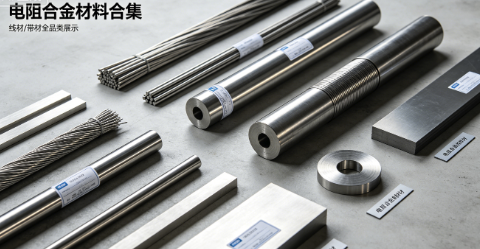
Fueled by rapid expansion of downstream industries including new energy vehicles, energy storage, AI servers and precision instruments, domestic market demand for precision resistance alloys has maintained steady growth. Coupled with national strategies to achieve self-reliance and controllability of key basic materials, the industry has ushered in a prime window for domestic substitution.
Precision resistance alloys (Cu-Mn, Cu-Mn-Ni, Ni-Cr, Fe-Cr-Al series, etc.) serve as core substrates for alloy resistors, wirewound resistors and metal foil resistors, directly determining the precision, stability, service life and safety of end products. For a long time, high-end market segments were monopolized by international giants. Nevertheless, as domestic manufacturers ramp up R&D investment, mature processes and product quality, the localization rate of mainstream alloys such as constantan, manganin, nichrome and FeCrAl keeps rising, with certain product specifications matching international performance benchmarks.
On the policy front, the Ministry of Industry and Information Technology and other authorities issued the Special Action Plan for High-Quality Development of Basic Electronic Materials (2025–2027). The document lists high-stability resistance alloys of nichrome, manganin and constantan series as priority breakthrough materials, setting clear targets: a minimum localization rate of 82% by 2026, and batch consistency pass rate of key grades above 99.3%. Supporting subsidies for technical transformation have also been rolled out to deliver robust policy backing for industrial growth.